In addition to lighthouses, I have taken many photos of birds at home and on my travels. Thought I would share them as I have my lighthouse pictures. Hope you enjoy. Cheers, Neal
The Turkey Vulture (Scientific name - Cathartes aura) is found throughout the U.S.A., as far South as Mexico and into Southern Canada. These birds have a good sense of smell which they follow to locate carcasses of dead animals. They have long wings and can be seen soaring over areas of potential food. They have brownish back and wings, black underparts, a long tail and a small red head with naked skin around the eye. Top photo taken in March 2014 in Abbotsford, B.C. Bottom photo taken in 2011 near Miami, Florida.
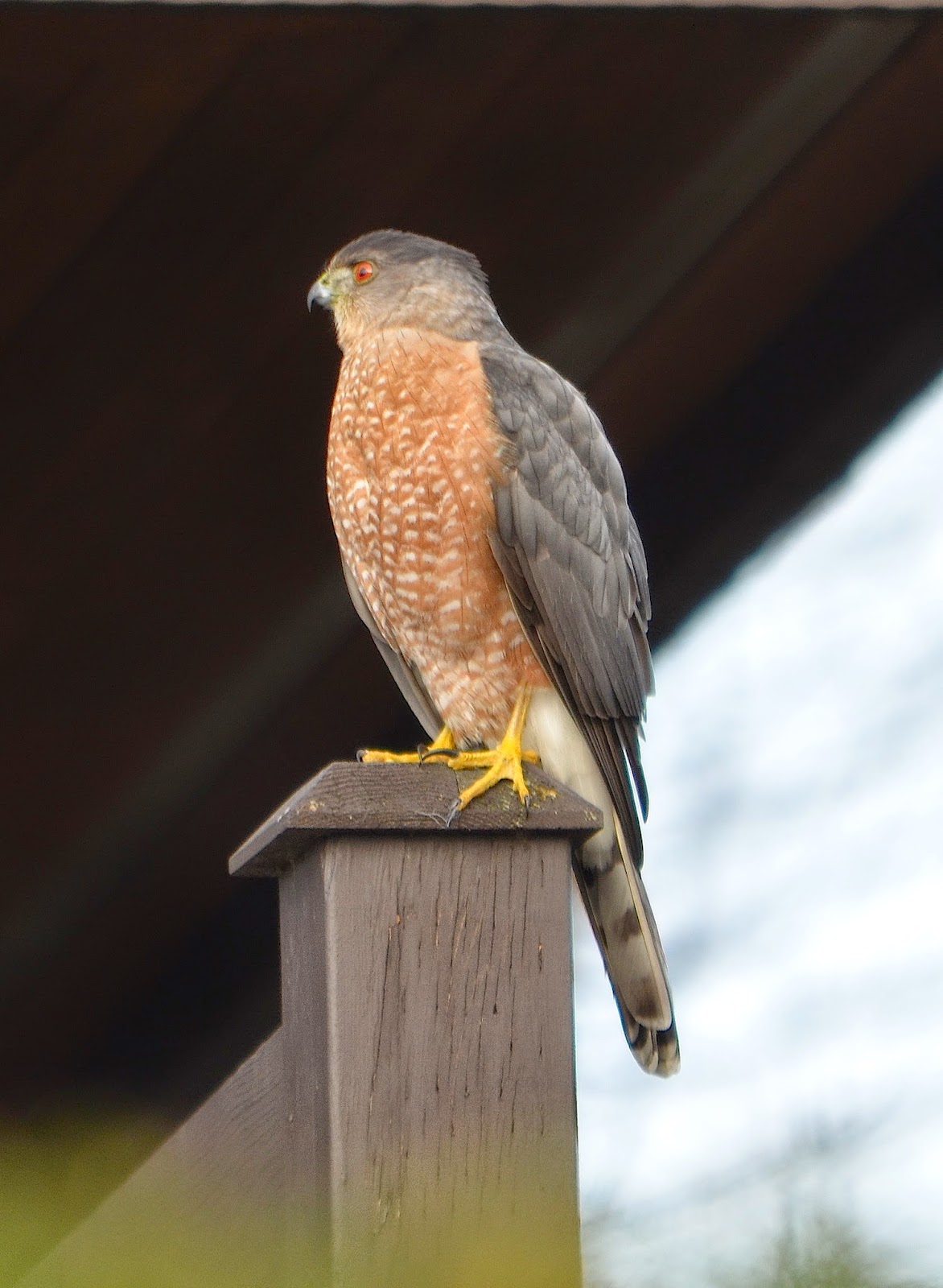
The Cooper's Hawk (Scientific name - Accipiter cooperii) is a medium sized woodland hawk that is capable of maneuvering quickly through fairly dense vegetation. It feeds mainly on small birds and is sometimes found near bird feeders. It also feeds on small animals such as chipmunks and small squirrels. The Cooper's Hawk is found in the Southern parts of Canada and as far South as Mexico. The Cooper's Hawk has greyish blue upper parts and a darker crown and red eyes. The tail is rounded and has bands of white at the tip. While they look similar to the Sharp Shinned Hawk, the Sharp Shinned Hawk is smaller and the tip of the tail is not rounded. Top two photos were taken in November 2013 in Abbotsford, B.C. Bottom photo taken in Abbotsford, B.C. in December 2014.
The Lesser Scaup (Scientific name - Aythya affinis) is the most common diving duck that is found in North America. They breed from Alaska across to Eastern Canada and winter as far South as the Caribbean and Northern South America. The majority winter on the coastlines, but some winter on reservoirs and lake further inland.
Male
Female
The males have a purple-green gloss to their heads and pale flanks. The females are duller in colour and have a white patch around the base of their bill. They are very similar to the Greater Scaup. Photos all taken at Mill Lake in Abbotsford, B.C. in 2011 and 2013.
The House Finch (Scientific name - Carpodacus mexicanus) is a bird found throughout most of North America. It was first reported in 1941 in the Eastern U.S. and is believed to have originated from the illegal bird trade.
Males display red on their head and chest and have a streaked underbelly. Females do not have the red and are mostly brown streaked. Top three photos taken in Abbotsford, B.C. in October 2013 and the bottom photo taken in August 2012 at the George C. Reifel Migratory Bird Refuge in Delta, B.C.
The Clark's Nutcracker (Scientific name - Nucifraga columbiana) is a bird in the crow family and found in the mountains of Western Canada and the U.S. They are often found in pine forests as they feed on seeds from pine cones. They are also often found in scenic areas begging food from tourists.
They are pale grey birds with black wings. The tail is black in the center and white along either side. They have a long straight and sharp tipped bill. Photos were taken at Manning Park, British Columbia in May 2013.
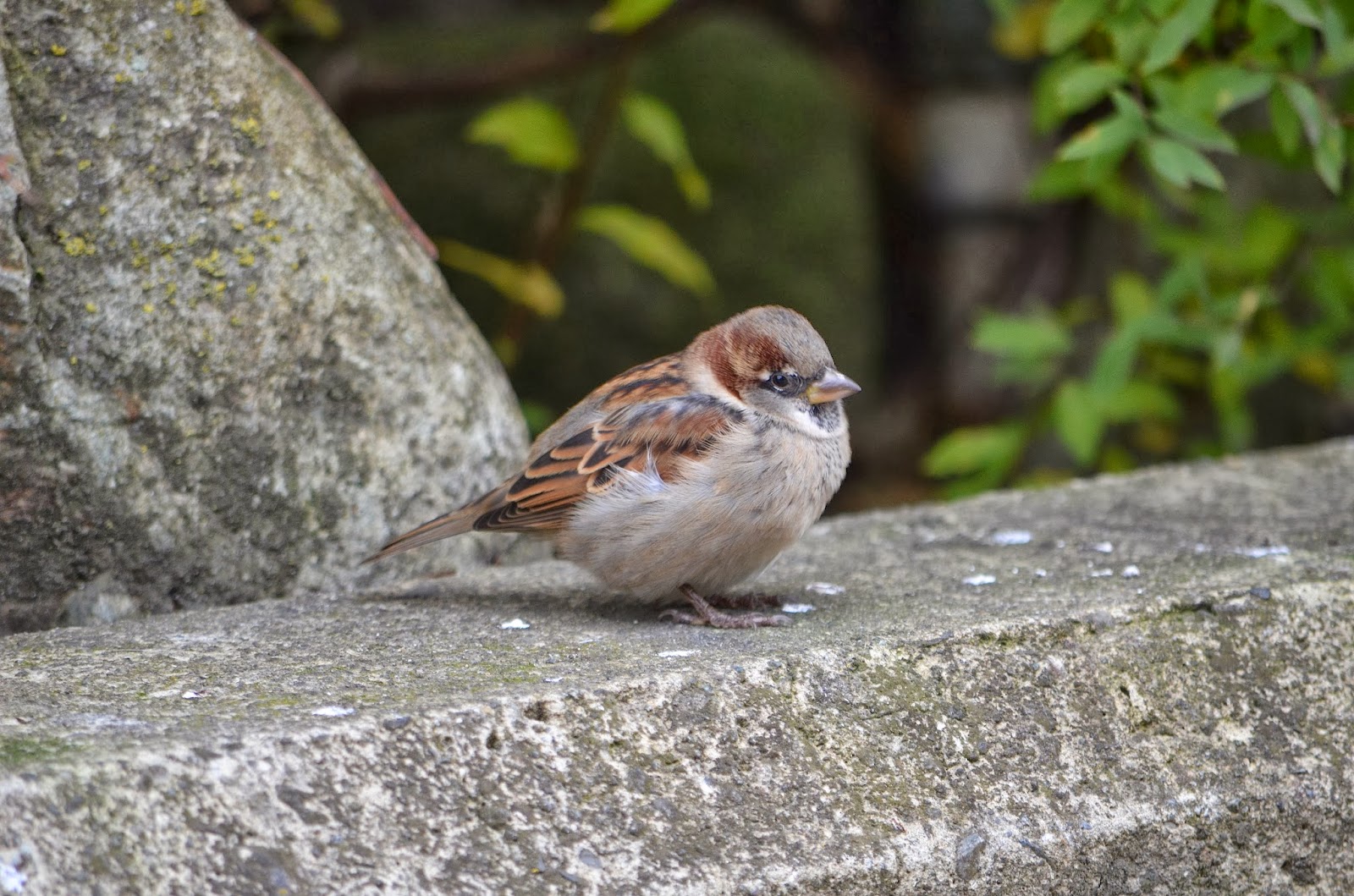
The House Sparrow (Scientific name - Passer domesticus) was first introduced to North America in Brooklyn, New York in 1850 and today is found in most of North America. It is also found in Central America, South America and the West Indies. They are native to Europe and Asia but have been introduced to many parts of the world. It differs from the other 'sparrows' in that it comes from the Eurasian weaver-finch family. They have a fuller chest and more rounded head and shorter tail than most other 'sparrows'. They are a common bird and are found often in developed and urban areas.
They have a grey head, white cheeks and a black throat. The black throat patch is much more predominate in breeding males (as in the third photo). Back and wings are striped with buff, black and brown. Top photo taken in Whistler, B.C. in October 2013. The other photos were taken on the island of Maui in Hawaii in November 2012.
The Song Sparrow (Scientific name - Melospiza melodia) is a common sparrow found throughout much of North America from as far North as Southern Alaska and South to Mexico. They are often seen on the ground and in low vegetation.
The Song Sparrow is a medium sized sparrow and is mostly brown and grey. It has bold streaking on its white chest and a reddish brown cap and a brown streak through its eye. Top two photos taken in Abbotsford, B.C. in October 2013 and the bottom photo was taken at the George C. Reifel Migratory Bird Sanctuary in March 2013. The photo second from the bottom was taken at Piper Spit, Burnaby Lake, Burnaby, B.C. in May 2015.
The Anhinga (Scientific name - Anhinga anhinga) is a waterbird found in the Southern U.S. around the Gulf of Mexico. It is also found in the Caribbean and into South America as far South as Uruguay. These birds like warm water and prefer fresh water. They are known by a number of names including, Water Turkey, Snakebird (because they swim with just their long necks out of the water), and the American Darter. The Anhinga has a long 'S' shaped neck and long thin pointed bill. They have long broad tail feathers. Last photo taken in February 2011 and others in August 2016 at Lake Tohopekaliga, Florida
The Dark Eyed Junco (Junco hyemalis) is a common small sparrow found throughout North America. They breed mostly in Canada and winter in the U.S. and as far south as Northern Mexico. In some areas of South West Canada and the Western U.S. they are year round inhabitants. The Dark Eyed Junco is observed mostly on the ground at the base of trees and in bushes, or under bird feeders.
Dark Eyed Juncos are mainly grey and brown with a white underbelly. Some have noticeably darker heads and those are sometimes known as Oregon Juncos. Photos taken in Abbotsford, B.C. in October 2013.
The Snow Goose (Scientific name - Chen caerulescens) is a species of goose found in North America. They breed in the North of Canada and Alaska and also in Greenland and Northeast Siberia. They migrate South as far as Mexico. They are often observed in large flocks and like wetlands and agricultural fields. There is a darker morph of this species that is known as the Blue Goose.
The Snow Goose is mainly white with black wing tips.
Top photo taken in March 2010 in the Fir Island area of Skagit County, Washington, U.S.A. Remainder taken in October 2014 on Westham Island, Delta, B.C.