
Friday, July 10, 2015
Willow Flycatcher
The Willow Flycatcher (Scientific name - Empidonax traillii) is a small fairly drab looking flycatcher found usually in wet bushy areas. They range across the entire United States and up into the more southern parts of Canada. They migrate south into Central and South America. They have a brownish back with white bars on the wings with white underparts. In less mature birds the underparts may display a yellowish wash. They are very close in appearance to the Alder Flycatcher. Photo taken at Rolley Lake Provincial Park, Mission, British Columbia in July 2015.


Friday, May 22, 2015
White-crowned Sparrow
The White-crowned Sparrow (Scientific name - Zonotrichia leucophrys) is a large sparrow with a distinctive head that is found throughout North America from Alaska to the Gulf of Mexico. They are mainly brown with white wing bars and a distinctive black and white striped head. They are often seen hopping on the ground or on low branches. Photos taken (top to bottom) at the Great Blue Heron Wildlife Reserve in Chilliwack, B.C. in April 2014; Whistler, B.C. in September 2013; Moose Jaw, Saskatchewan in May 2015; and Yellowstone National Park in May 2013.


 |
| Juvenile |


Harris's Sparrow
The Harris's Sparrow (Scientific Name - Zonotrichia querula) is a large sparrow with a striking head. It can be found in the central part of North America as far north as the Northwest Territories of Canada and as far south as southern Texas. It is rarely found in the eastern or western parts of the continent. It has a distinctive head with a black bib, forehead and crown. Photos taken in Moose Jaw, Saskatchewan in May 2015.


White-throated Sparrow
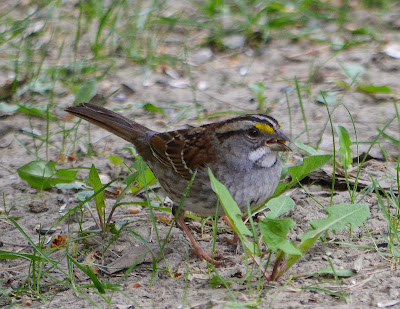
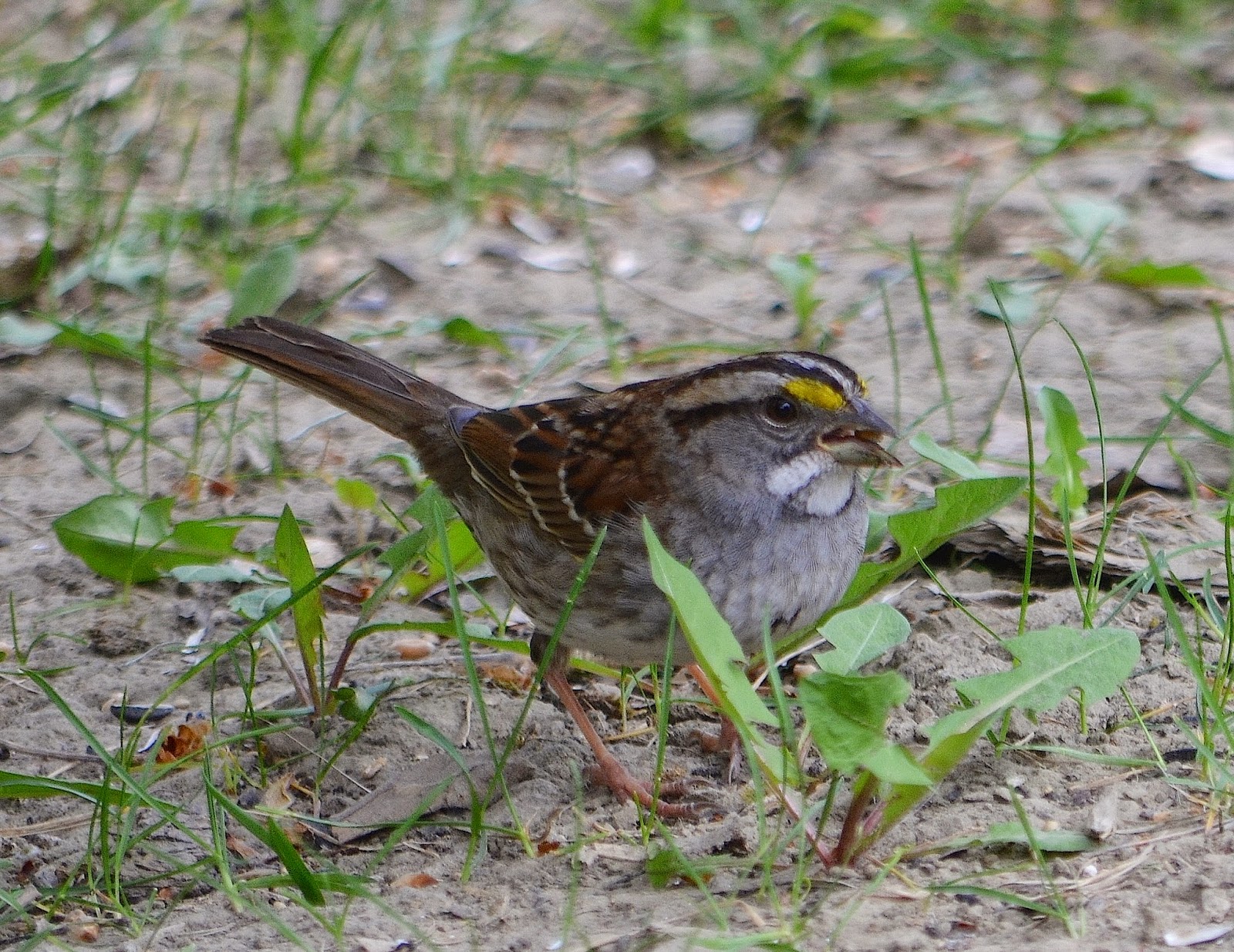
The White-throated Sparrow (Scientific Name - Zonotrichia albicollis) is a large sparrow found throughout the eastern and midwestern North America. It ranges as far north as the Northwest Territories of Canada and as far south as Mexico. They are rare on the west coast but can be found in California. They have a fairly distinctive head with a white throat and black and white head with a yellow stripe between the eye and prominent bill. Photos taken in Moose Jaw, Saskatchewan in May 2015.


Cinnamon Teal
The Cinnamon Teal (Scientific name - Anas cyanoptera) is a small dabbling duck found in ponds and marshes throughout western North America as far north as mid British Columbia and Alberta. They are also found in western South America. The males are brightly coloured with a cinnamon coloured head and body during breeding season. The female is fairly plain brown with a scalloped pattern on the back and flanks. Photos taken in May 2015 in Valemount, British Columbia.


Wednesday, May 20, 2015
Purple Martin
The Purple Martin (Scientific name - Progne subis) is the largest of the swallows found in North America. In North America they range from the Eastern Seaboard out to the prairies and can also be found in smaller numbers on the West Coast. They breed in North America and migrate south as far as South America. They feed on ariel insects and like to stay and nest in large groups. The photos were taken in May 2015 in Yorkton, Saskatchewan.

 |
| Male |

 |
| Female |
Marsh Wren
The Marsh Wren (Scientific name - Cistothorus palustris) is a small bird found in both saltwater and freshwater marshes throughout North America. They can be heard singing loudly day and night. They range from the northern part of the Canadian Provinces and south into Mexico. They are brown with buff breast and black with white streaks on the back and barred tail feathers. They can be seen darting amongst the reeds and perching on the stalks and reed tops. The photos were taken at Cranberry Marsh in Valemount, B.C. in May 2015.


Monday, April 27, 2015
Gadwall
The Gadwall (Scientific Name - Anas strepera) is a dabbling (puddling) duck found across North America, although more prevalent in the West. They range from Alaska down into Mexico and Central America. It is slightly smaller than the more common Mallard and the females of the species look similar. The male has a round brown head, and a grey brown and black body with finely patterned flanks and breast. They have a black patch on the upper tail. Photos taken at the Colony Farm Regional Park, Port Coquitlam, B.C. in April 2015.
 |
| Male |
 |
| Female |
Yellow-headed Blackbird
The Yellow-headed Blackbird (Scientific Name - Xanthocephalus xanthocephalus) is found across the Western part of North America. They breed as far North as the Northern part of the four Western Canadian Provinces and winter as far South as Mexico. They are a fairly large blackbirds with a distinctive yellow head and chest, black bodies with a white stripe along the wing.They prefer wetlands and can be aggressive to other species in these areas such as the smaller Red-winged Blackbird and Marsh Wrens. While not always common on the West Coast, these photos were taken in April 2015 at the Iona Beach Regional Park in Richmond, British Columbia.


Tuesday, April 21, 2015
Tree Swallow
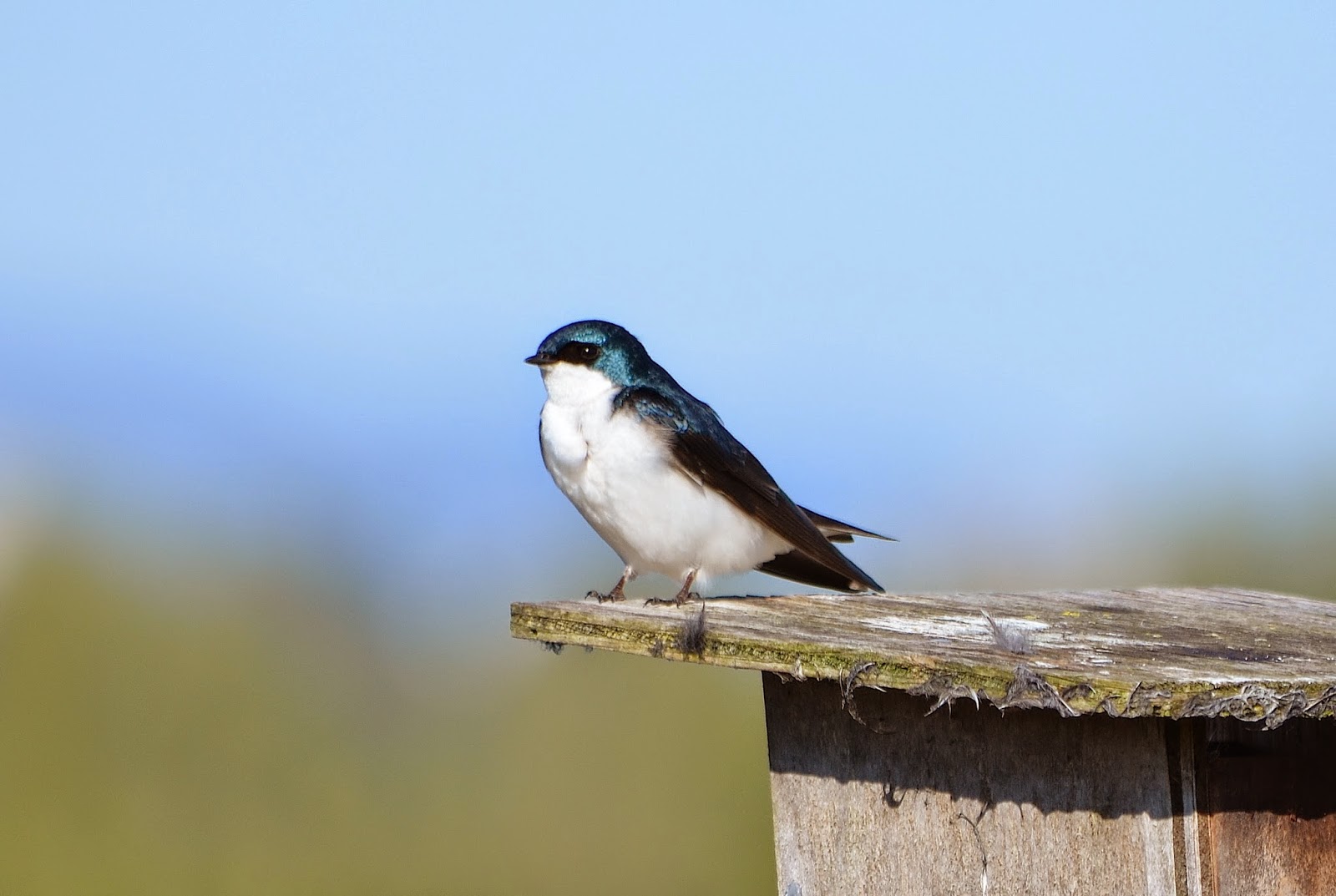
The Tree Swallow (Scientific Name - Tachycineta bicolor) is probably the most commonly seen swallow in North America. They can be found throughout Canada and the U.S.A. as far north as Alaska. They range south in winter to Mexico and Central America. They have a streamlined body, pointed wings and a notched tail. They have a bluish green back and head with a white underbelly. The bluish green appears iridescent. Females and immature males have more brown showing. Photos were taken in April 2015 at the Iona Beach Regional Park, Richmond, B.C.


Subscribe to:
Comments (Atom)